Dragi Kimovski Receives FGCS Outstanding Reviewer Award 2025

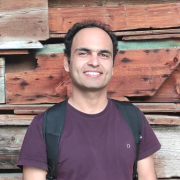
We are proud to announce that Dragi Kimovski has been selected as a recipient of the 2025 Outstanding Reviewer Award by the Future Generation Computer Systems journal.

Out of more than 5,400 reviewers worldwide, only 31 were chosen for this distinction, making this recognition highly competitive and a testament to exceptional contributions to the peer-review process. The award was given for the dedication, expertise, and commitment to maintaining high scientific standards, which have played an important role in supporting the quality and integrity of published research.

The full list of awardees will be featured in an upcoming open-access editorial in FGCS (Volume 182, September 2026).

Sustainability in Video Encoding and Streaming:
Energy-Efficient Techniques and Metrics

Workshop on Media Energy Consumption Measurement and Exposure

[Workshop URL] [Slides] [PDF]

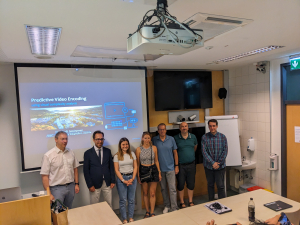
Presenter: Christian Timmerer (Alpen-Adria-Universität Klagenfurt

Abstract: The presentation discusses the increasing environmental impact of video streaming and highlights the urgent need for more sustainable approaches across the entire streaming pipeline. Video traffic dominates internet usage and contributes significantly to global greenhouse gas emissions, while the demand for higher quality content continues to drive up computational complexity and energy consumption in encoding, delivery, and playback.

A central insight is that there is a strong trade-off between video quality and energy consumption, where small reductions in quality can lead to substantial energy savings. By introducing energy as an explicit optimization objective, techniques such as content-aware encoding, energy-aware bitrate ladder construction, and real-time optimization for live streaming can significantly reduce energy usage while maintaining nearly the same perceptual quality.

The work also emphasizes the role of adaptive bitrate algorithms that incorporate energy consumption alongside traditional quality and buffer-based metrics. These approaches demonstrate that it is possible to simultaneously improve user experience and reduce energy consumption, indicating that sustainability and performance can be aligned rather than conflicting goals.

To enable such optimizations, the presentation introduces a range of metrics and models, including video complexity measures, quality prediction models, and machine learning-based approaches for estimating encoding and decoding energy as well as CO₂ emissions. These tools support more informed, data-driven decisions across the full streaming workflow from encoding to playback.

Another important theme is end-to-end optimization, where energy efficiency depends on the combined behavior of encoding strategies, bitrate selection, and client-side adaptation. Industry efforts confirm the practical relevance of these approaches and highlight the importance of collaboration and real-world validation.

Despite promising results, several challenges remain, including difficulties in measuring and benchmarking energy consumption, the lack of standardized methodologies, and the limited integration of energy considerations into existing workflows. Overall, the presentation argues that energy consumption should become a first-class optimization target in video streaming systems, similar to established quality metrics, to enable truly sustainable media delivery.

Keywords: sustainable streaming, energy-aware encoding, adaptive bitrate streaming, green multimedia, video compression, bitrate ladder optimization, QoE optimization, energy-quality tradeoff, video complexity analysis, CO2 footprint, energy modeling, machine learning for video, end-to-end optimization, eco-efficient streaming, real-time streaming optimization

On Thursday, February 26, 2026. Kurt successfully defended his PhD thesis (Service Discovery in the Computing Continuum) under the supervision of  Prof. Radu Prodan and Dr. Dragi Kimovski. The defense was chaired by Assoc.-Prof. DI Dr Klaus Schöffmann and the examiners were Prof. Valeria Cardellini (online) and Prof. Karin Anna Hummel (on-site). 

We are pleased to congratulate Dr. Kurt Horvath on successfully passing his Ph.D. examination!

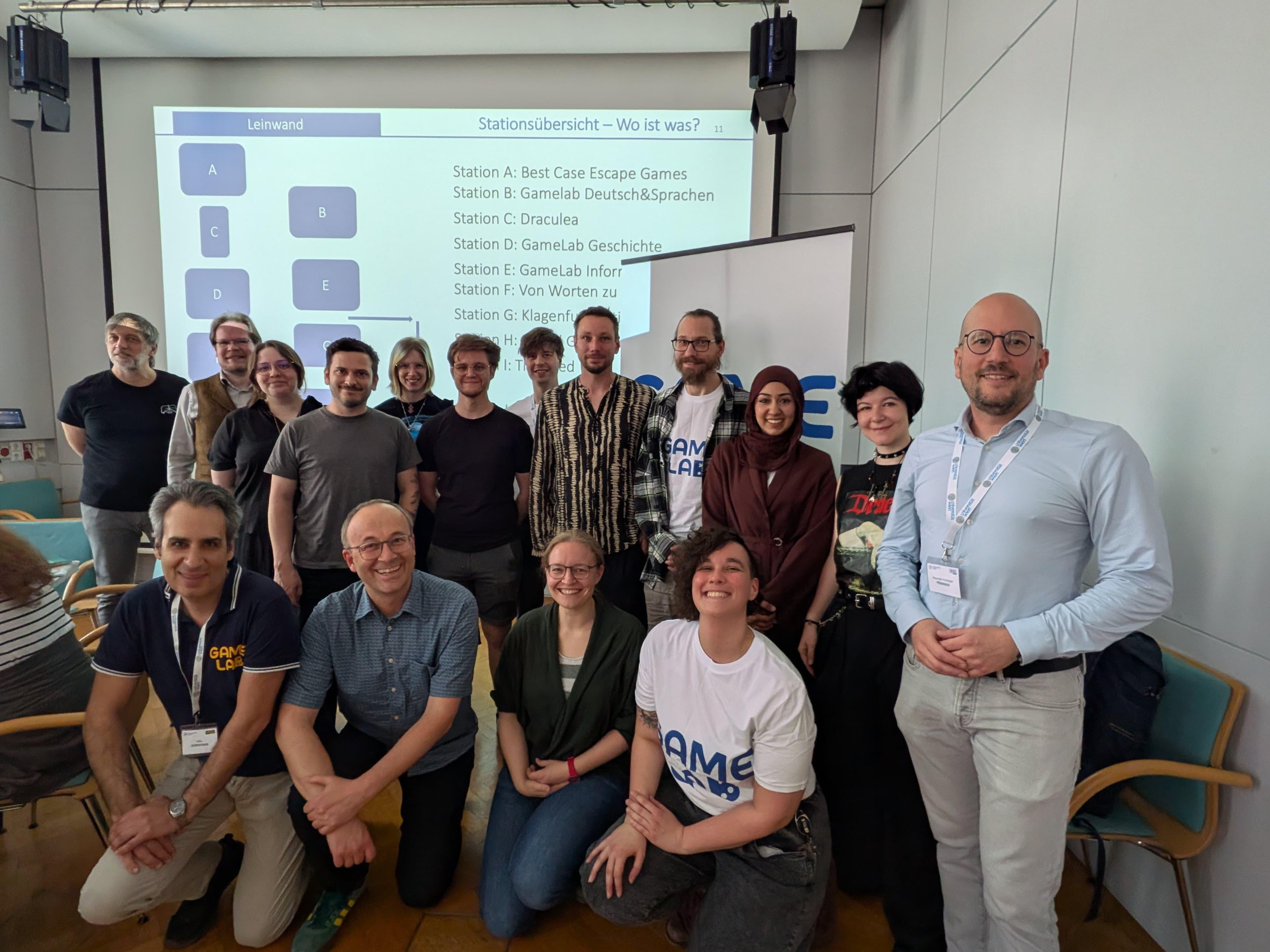
On 27 February, Sabrina Größing and Dr Felix Schniz welcomed a delegation from the University of Vienna’s Game Lab to Klagenfurt. After exchanging origin stories, concepts and objectives, the warm‑hearted meeting quickly revealed shared ambitions and core values. The participants agreed to schedule follow‑up visits to both Vienna and Klagenfurt, deepening the partnership with the Klagenfurt Critical Game Lab and laying the groundwork for a burgeoning network of game labs across Austria.


Priv.-Doz. Farzad Tashtarian has been elevated to IEEE Senior Member in recognition of his contributions to multimedia streaming systems.

19 February 2026

Vicor engineer Chris Swartz achieves senior member status at IEEE

On 8 January 2026, Dr Felix Schniz held a guest presentation at the University of Graz. Invited by the Department of English, his talk focused on the narrative capabilities of video games:


Video Games as Storytelling Worlds

The capacities for narrative superstructures in video games are often depicted as being at odds with their elementary interactivity. From the game studies defining faux-skirmish between ludology and narratology, the question of spatial narrative capacities, and steadily refining perspectives on the literary purpose of video games, the central question remained ever the same: What is the connection between agency and the literary?


This lecture session explores the question in depth. It builds on an approximate definition of the multidisciplinary and complex medium to map its historical literary emancipation. Following this overview, concrete examples are used to evaluate the usage of literary key terminology for the analysis of video games. A distinct focus is set on the unique potential for interactive storytelling in video games.

December 19-21, 2025
Organized by: Tom Tucek, Patrick Mieslinger

With help from: Bodo Thausing, Kristell Potocnik, Agon Guri

With 63 participants and 15 submitted games, this year’s winter game jam has concluded just before the winter holidays.

Students, teachers, alumni, and even individuals not directly affiliated with the university came together to create new video games from scratch, all within a 48-hour time frame. The topic this time was “Resistance”.

A big thank you to everyone who participated or helped; you made this event a big success once again!

Please feel free to check out all the games here:

https://itch.io/jam/klujam-ws25


On 14.11.2025, Farzad Tashtarian defended his habilitation thesis “Network-Assisted Adaptive Streaming: Toward Optimal QoE through System Collaboration”

Congratulations!

Committee members:
Prof. Martin Pinzger (Chairperson), Prof. Oliver Hohlfeld (external member), Prof. Bernhard Rinner, Prof. Angelika Wiegele, Prof. Chitchanok Chuengsatiansup, MSc Zoha Azimi Ourimi, Dr. Alice Tarzariol, Kateryna Taranov, and Gregor Lammer

On 22 October 2025, Dr Felix Schniz opened the newly founded Media Club of AAU with a spectacular guest lecture. Founded by the Department of English, the Media Club has been installed to offer students an extracurricular and multidisciplinary journey through a leitmotif every semester. Starting with “Dystopia” in Winter 2025, Felix Schniz took the audience onto a journey through the video game “Hellblade: Senua’s Sacrifice” and reminisced on technological and psychological facets of game design.

We are happy to announce that our tutorial “Serverless Orchestration on the Edge-Cloud Continuum: From Small Functions to Large Language Models” (by Reza Farahani) has been accepted for IEEE/ACM UCC 2025, which will take place in Nantes, France, in December 2025.

Venue: IEEE/ACM International Conference on Utility and Cloud Computing (UCC) (https://ucc-conference.org/)

Abstract: Serverless computing simplifies application development by abstracting infrastructure management, allowing developers to focus on functionality while cloud providers handle resource provisioning and scaling. However, orchestrating serverless workloads across the edge-cloud continuum presents challenges, from managing heterogeneous resources to ensuring low-latency execution and maintaining fault tolerance and scalability. These challenges intensify when scaling from lightweight functions to compute-intensive tasks such as large language model (LLM) inferences in distributed environments. This tutorial explores serverless computing’s evolution from small functions to large-scale AI workloads. It introduces foundational concepts like Function-as-a-Service (FaaS) and Backend-as-a-Service (BaaS) before covering advanced edge-cloud orchestration strategies. Topics include dynamic workload distribution, multi-objective scheduling, energy-efficient orchestration, and deploying functions with diverse computational requirments. Hands-on demonstrations with Kubernetes, GCP Functions, AWS Lambda, OpenFaaS, OpenWhisk, and monitoring tools provide participants with practical insights into optimizing performance and energy efficiency in serverless orchestration across distributed infrastructures.