Distributed and Parallel Systems

Prof. Radu Prodan

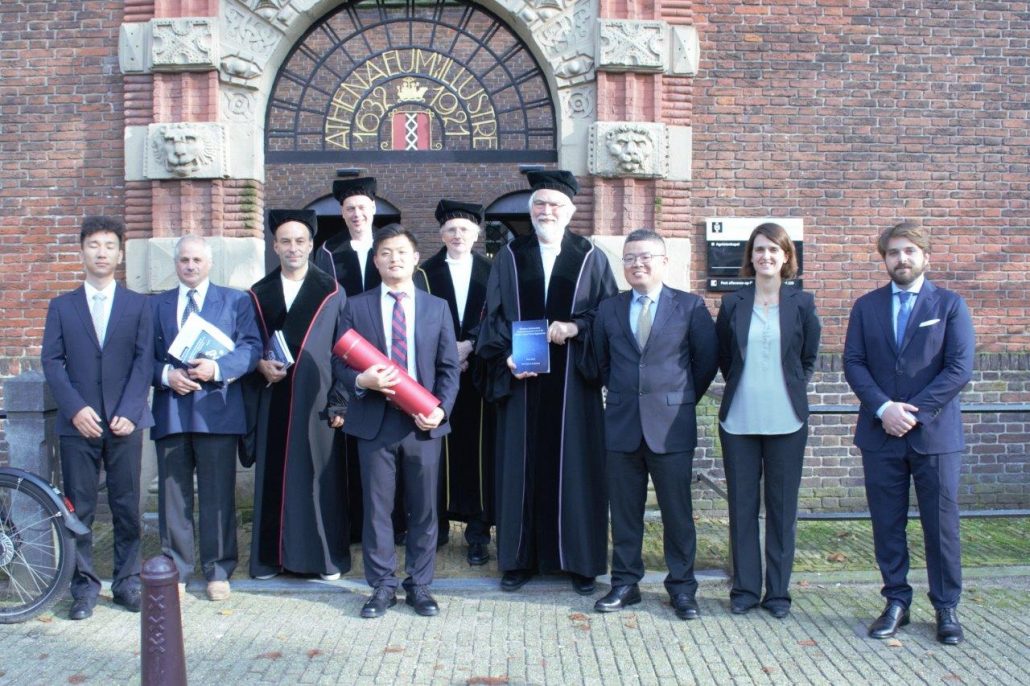
Prof. Radu Prodan participated at the PhD examination of Dr. Yang Hu and Dr. Huan Zhou at the University of Amsterdam, Netherlands.

With: Prof. Peter van Emde Boas, Prof. Cees de Laat, Prof. Henri E. Bal, Dr. Paola Grosso, Dr. Zhiming Zhao, Prof. Rob van Nieuwpoort, Prof. Pieter Adriaans, Dr. Adam S.Z. Belloum

Read more about the High level Symposium.

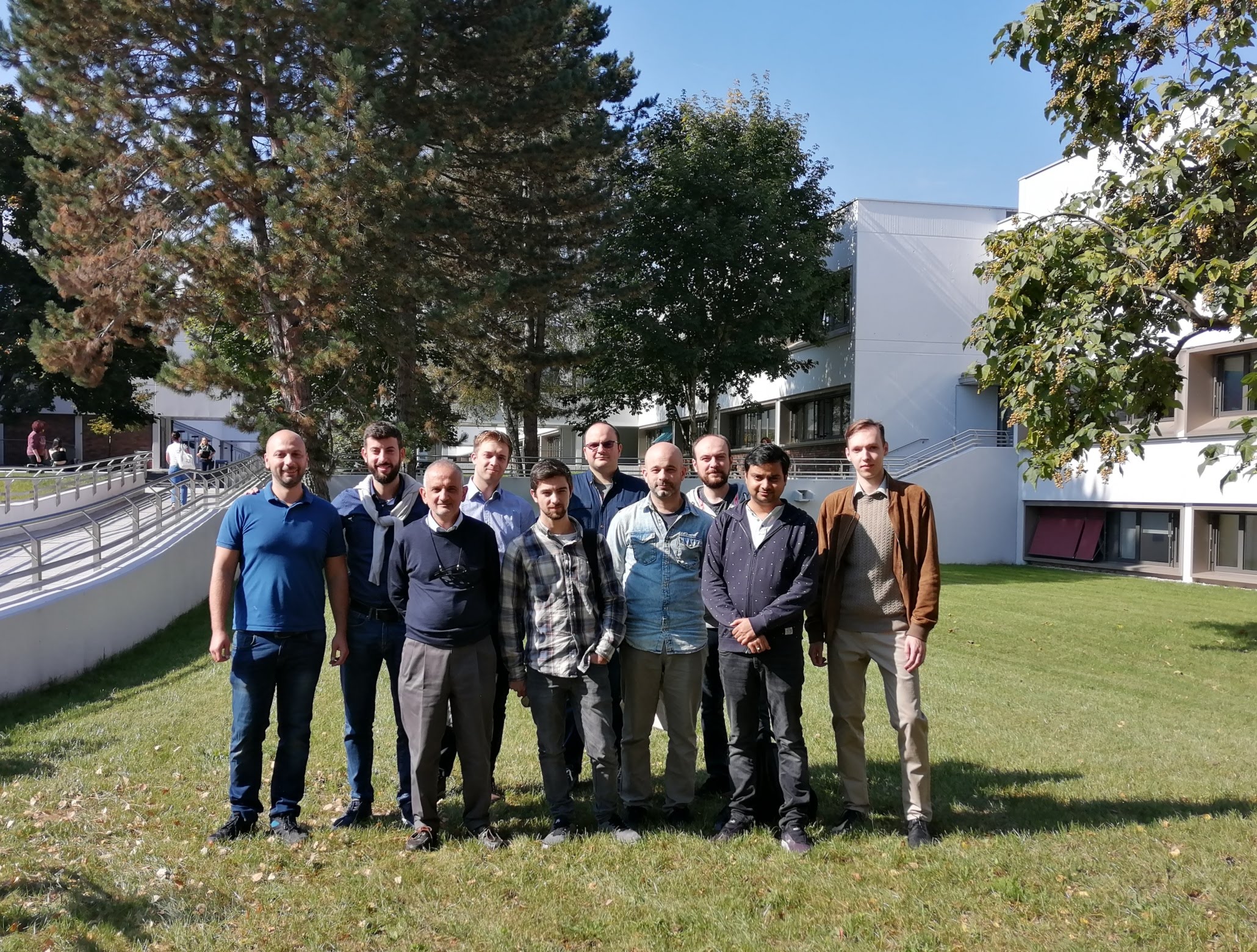
The Klagenfurt University hosted the first ASPIDE technical meeting (30th September – 2nd October), which aims on designing scalable software solutions for exascale computing.

2019 ASPIDE Meeting Klagenfurt

ASPIDE Meeting at Klagenfurt University

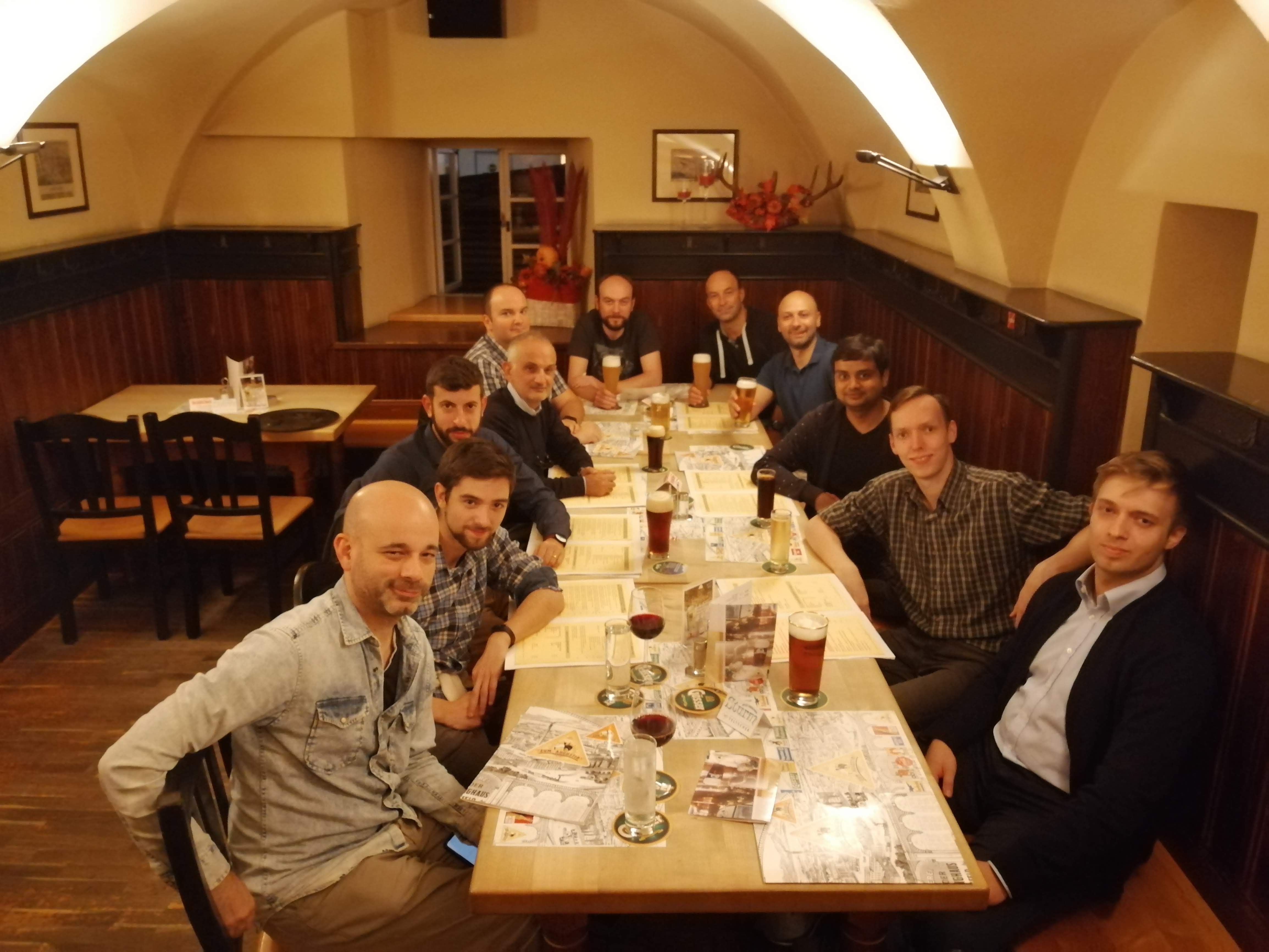
2019 ASPIDE Meeting Klagenfurt Social Event

2019 ASPIDE Meeting Klagenfurt (Social Event)

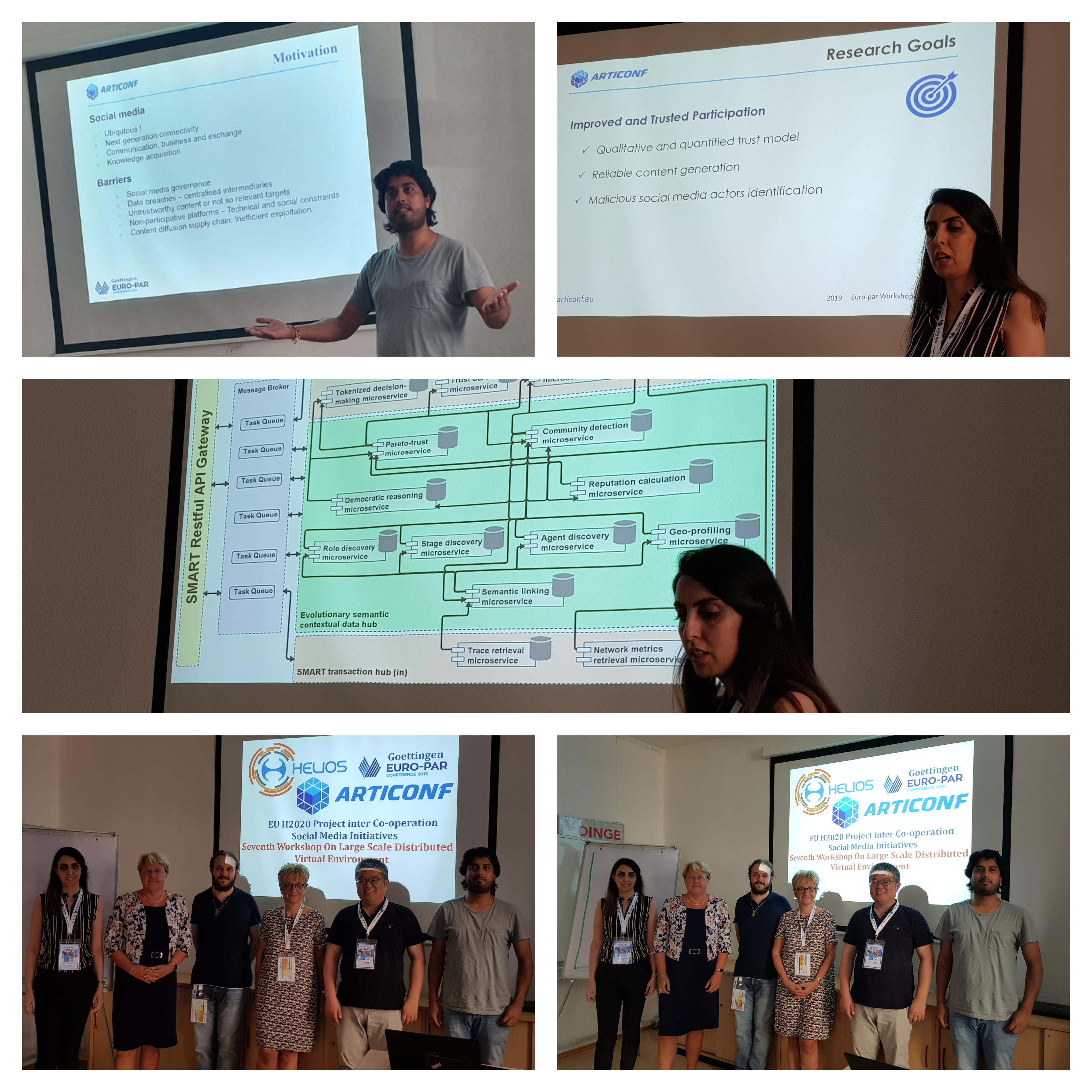
Trust, privacy, control and what else ! Lets hear to ARTICONF consortium as what transpires them to build Next Generation Social Media Ecosystem with novel set of trustworthy, resilient, globally sustainable and decentralized data-driven services.

The papers titled, ‘ARTICONF: Towards a Smart Social Media Ecosystem in a Blockchain Federated Environment’ , and ‘A Semantic Model with Self-Adaptive and Autonomous Relevant Technology for Social Media Applications’ presented at Seventh Workshop on Large Scale Distributed Virtual Environments, LSDVE 2019 collocated at Europar 2019.

ARTICONF team also took advantage of the conference to hold a round table inter-cooperative discussion with an another Next Genreation Social Media EU H2020 project HELIOS with Dr. Laura Ricci, Dr. Dana Petcu, and Dr. Zhiming Zhao. Both project teams identified a number of similar research topics exiting within both projects namely #Context #Trust #CommunityDetection, and hence pledged support for improved inter and intra- cooperation.

The presented papers description are as follows:

1. ARTICONF: Towards a Smart Social Media Ecosystem in a Blockchain Federated Environment

Authors: Radu Prodan, Nishant Saurabh, Zhiming Zhao and Kate Orton-Johnson

2. A Semantic Model with Self-Adaptive and Autonomous Relevant Technology for Social Media Applications

Authors: Zahra Najafabadi Samani, Alexander Lercher, Nishant Saurabh, Radu Prodan

Articonf LSDVE, Euro-Par 2019

Articonf LSDVE, Euro-Par 2019

Prof. Radu Prodan

Radu Prodan is program chair at the seventeenth international workshop on algorithms, models and tools for parallel computing on Heterogeneous Platforms (HeteroPar’2019), collocated at Euro-Par 2019, August 27, 2019.

Prof. Radu Prodan

The paper “A Container-driven Approach for Resource Provisioning in Edge-Fog Cloud” has been accepted for publication at the 5th International Symposium on Algorithmic Aspects of Cloud Computing, ALGOCLOUD 2019 to be held at Munich, Germany (September 9-13, 2019).

Authors: Hamid Mohammadi Fard, Radu Prodan and Felix Wolf

Prof. Radu Prodan

The paper “Dynamic Multi-Objective Virtual Machine Placement in Cloud Data Centers” has been accepted for publication at the Euromicro Conference on Software Engineering and Advanced Applications, SEAA 2019 to be held at Chalkidiki, Greece (August 28-30, 2019).

Author: Radu Prodan

Abstract: Minimizing the resource wastage reduces the energy cost of operating a data center, but may also lead to a considerably high resource overcommitment affecting the Quality of Service (QoS) of the running applications. Determining the effective tradeoff between resource wastage and overcommitment is a challenging task in virtualized Cloud data centers and depends on how Virtual Machines (VMs) are allocated to physical resources. In this paper, we propose a multi-objective framework for dynamic placement of VMs exploiting live-migration mechanisms which simultaneously optimize the resource wastage, overcommitment ratio and migration cost. The optimization algorithm is based on a novel evolutionary meta-heuristic using an island population model underneath. We implemented and validated our method based on an enhanced version of a well-known simulator.
The results demonstrate that our approach outperforms other related approaches by reducing up to 57% migrations energy consumption while achieving different energy and QoS goals.