On 27 May 2026, Dr Felix Schniz held a guest presentation on the Transhuman Qualities of Bloodborne at the University of Ljubljana before joining the conference Creative Computing Cultures and Media Transfers in Europe as an invited guest. Following the spirit of cross-European perspectives on computing, the day concluded with a joint meeting on prospective project proposals.
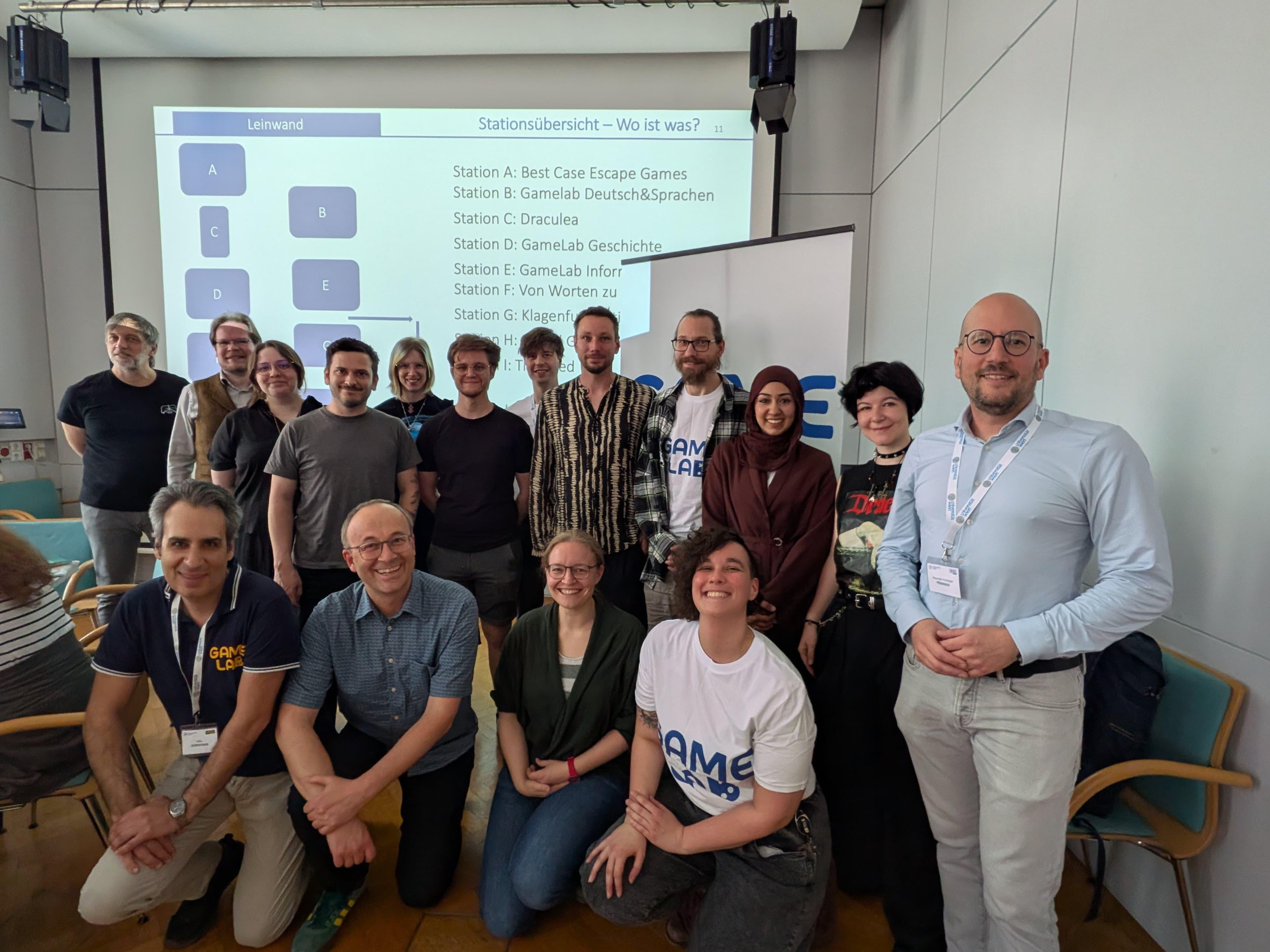
Following an invitation of the Viennese Game Lab, Felix Schniz and Sabrina Maria Größing have represented the Klagenfurt Critical Game Lab at the event “Spielend lernen!” that took place on 19 May 2026 at the Bildungsdirektion Wien. Klagenfurt was the first non-Viennese game lab to join the event underlining the importance of the University of Klagenfurt for Austrian Game Studies outside of Vienna, and able to represent its unique approaches to the challenges of introducing technological literacy and the importance of play to an intrigued audience of experts and pedagogues.
Building on a prior visit of Viennese Game Lab scholars to Klagenfurt, the event was concluded with a tour through the local game lab facilities on 20 May and an extended chat about shared challenges and future opportunities for cooperation.

Cross-Layer Dynamics in Live Low-Latency: A Dataset of ABR, CC, and AQM Interactions
18th International Conference on Quality of Multimedia Experience
Cardiff, UK, June 29th – July 3rd, 2026
[PDF]
Md Tariqul Islam (UNICAMP, Brazil), Farzad Tashtarian (AAU, Austria), Christian Esteve Rothenberg (UNICAMP, Brazil), Christian Timmerer (AAU, Austria).
Low-latency video streaming, such as Low-Latency DASH (LL-DASH), requires maintaining high Quality of Experience (QoE) under varying network conditions. In LL-DASH, QoE is jointly influenced not only by Adaptive Bitrate (ABR) decisions, but also by transport-layer Congestion Control (CC) and network-layer Active Queue Management (AQM), whose interactions remain insufficiently characterized due to limited cross-layer experimentation. Therefore, we present a large-scale LL-DASH dataset comprising approximately 2,000 controlled sessions across three dash.js ABR algorithms (L2A, Dynamic, LoLP), three CC schemes (CUBIC, BBRv1, Prague) across both TCP and QUIC transport protocols, four AQM configurations (FIFO, FQ-CoDel, CAKE, DualPI2), and multiple congestion scenarios. The dataset supports QoE-aware cross-layer analysis and ABR benchmarking under diverse network configurations and is available at: https://github.com/cd-athena/ ll-dash-crosslayer-dataset
Paper title: EVLM: Intent-Driven Edge Vision Language Model for UAV-Based Power Line Inspection
Authors: Reza Farahani (DSG, TU Wien, Austria), Zoha Azimi (Christian Doppler Laboratory ATHENA, ITEC, University of Klagenfurt, Austria), Ilir Murturi (Department of Mechatronics, University of Prishtina, Kosova), Arda Goknil (SINTEF, Oslo, Norway), Sagar Sen (SINTEF, Oslo, Norway), Christian Timmerer (Christian Doppler Laboratory ATHENA, ITEC, University of Klagenfurt, Austria), Schahram Dustdar (DSG, TU Wien, Austria)
Conference: 2026 IEEE International Conference on Edge Computing and Communications (IEEE EDGE 2026)
Abstract:
Inspection of critical infrastructure, such as power lines, is increasingly conducted using unmanned aerial vehicles (UAVs) that capture aerial video for subsequent human review. Although recent edge-based approaches deploy onboard object
detectors to identify predefined defect classes, these pipelines remain closed-set, task-specific, and largely decoupled from operator intent and edge resource constraints. This paper introduces EVLM, an intent-driven vision-language framework for onboard UAV-based power line inspection. Given a high-level operator intent, EVLM (i) leverages lightweight histogram-based frame filtering to extract salient key frames under bounded compute budgets, (ii) executes a domain-adapted vision language model (VLM) directly on the UAV for intent-conditioned multimodal reasoning, and (iii) synthesizes structured inspection reports together with a minimal set of evidence frames, replacing continuous raw video transmission with compact semantic outputs. To align the VLM with infrastructure inspection semantics while preserving edge efficiency, we perform parameter-efficient fine-tuning using Low-Rank Adaptation (LoRA), enabling domain specialization without updating the full model parameters. We implement and fully deploy EVLM on an NVIDIA Jetson device representative of UAV-class onboard hardware and evaluate it using 20 publicly released power line inspection video sequences spanning 8 heterogeneous environments and 5 operational intent categories. Experimental results show a data reduction of 94.8 %, with transmitted data decreasing from 485 kB to 25 kB per 4 s segment, corresponding to 72.75 MB versus 3.75 MB over a 10 min inspection mission. EVLM operates feasibly on embedded hardware, maintaining moderate CPU/GPU utilization and bounded power consumption (5.6 W), while producing interpretable, intent-aligned inspection outputs with richer semantic insights than detection-centric baselines.
Assistant Prof. Dr. Hadi Amirpour has been elevated to IEEE Senior Member in recognition of his contributions to multimedia streaming systems.
IEEE Senior Member is the highest professional grade for which an IEEE member can apply. This distinction requires extensive professional experience and demonstrated accomplishments that reflect technical expertise, leadership, and professional maturity. Fewer than 10% of IEEE’s nearly half a million members worldwide have achieved this honor.

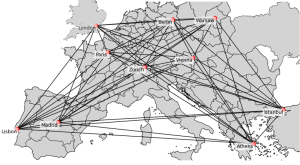
Quantifying Inter-City Network Latency in Europe: A Measurement based Study for Time-Critical Cloud Services
3rd Workshop on Engineering Techniques for Distributed Computing Continuum Systems (EDCCS), 22-25 June 2026, Seoul, South Korea
Authors: Thomas Schleicher, Kurt Horvath, Dragi Kimovski, Bernd Spiess, Oliver Hohlfeld
Abstract: Time-critical cloud and edge services depend on predictable and low-latency wide-area connectivity, yet inter-city network behavior often deviates from expectations based on geographic distance alone. This paper presents an evaluation framework and results on inter-city network latency across major European metropolitan areas, treating latency as a non-functional property relevant to benchmarking and service placement in cloud computing. We develop a scalable measurement framework based on a distributed probing infrastructure, analyze round-trip latency, and assess spatial efficiency and temporal stability. Initial results reveal unexpectedly high latency on long-distance paths from the Iberian Peninsula toward Turkey. Distance-normalized analysis further exposes pronounced inefficiencies on short-distance paths between Greece and Turkey, suggesting non-distance-related network effects beyond geographic proximity. Temporal analysis shows elevated latency variance and instability on paths involving Turkey, while most other inter-city connections closely follow distance-based expectations and remain stable over time. These findings highlight the importance of distance-normalized and stability-aware metrics for evaluating wide-area cloud connectivity. The presented methodology and results provide practical insight for benchmarking, placement, and operation of latency-sensitive cloud services across geographically distributed infrastructures.

The Association for Computing Machinery (ACM) has recognized Christian Timmerer as a Senior Member, honoring his professional achievements and contributions to the field of computing.
The ACM Senior Member designation is awarded to individuals who have demonstrated significant performance and commitment within the computing profession. This distinction highlights Christian Timmerer’s ongoing engagement with the research community and his impact on advancing the discipline.
As part of this recognition, he will receive an official ACM Senior Member certificate and pin, and his name will be listed on the ACM Senior Member award page.
Christian Timmerer also expressed his sincere appreciation to colleagues, collaborators, and supporters who contributed throughout the nomination process, emphasizing that this recognition reflects a shared effort within the community.
This honor underscores both his individual accomplishments and his continued dedication to excellence in computing research and practice.

Energy and Compression Efficiency in Large-Scale Video Streaming
IEEE International Conference on Image Processing (ICIP 2026)
[PDF]
Mohammad Ghasempour (AAU, Austria), Hadi Amirpour (AAU, Austria), and Christian Timmerer (AAU, Austria)
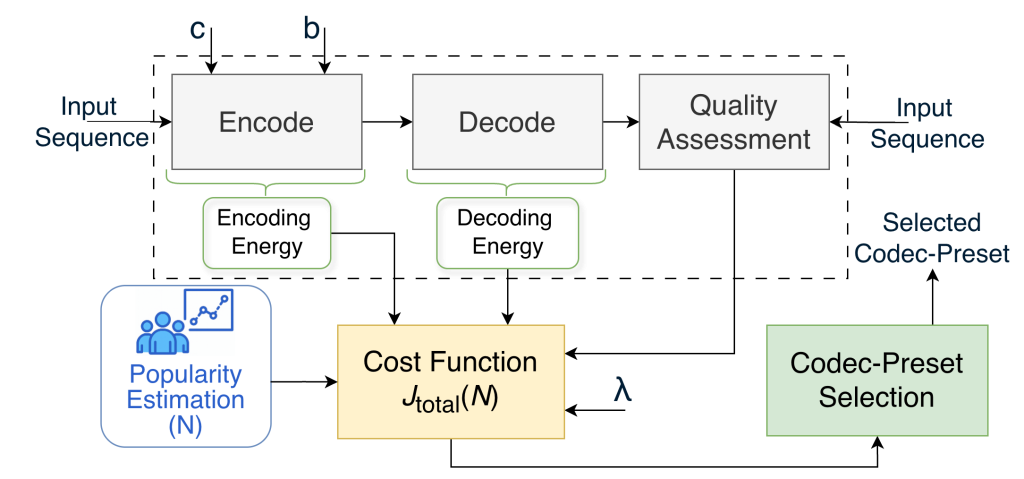
Abstract: The rise in large-scale video streaming has led to increased energy demands across the encoding, transmission, and decoding pipeline. While energy consumption in video streaming has been widely studied, encoding decisions are typically made without explicitly accounting for expected content demand. As a result, the impact of view count on energy consumption and compression efficiency remains largely unexplored. This limits the ability to make informed and efficient encoding decisions in real-world streaming scenarios. In this paper, we propose EcoEncode, an analytical framework to evaluate the impact of view count on codec-level encoding decisions and the resulting trade-offs between energy consumption and compression efficiency. We further show that these decisions depend on video content characteristics and encoding configurations. Based on our findings, we provide practical insights to guide the selection of codecs and presets. Experimental results show that view count is a key factor in codec-level decisions. For low-popularity videos, EcoEncode achieves up to 99% energy savings with only 1-4 VMAF points of quality loss. Across all scenarios, the selected configurations lie on or near the Pareto frontier, and EcoEncode improves quality by up to 14 VMAF points over the least energy-consuming configuration.

Title: Complexity prediction of hardware and software video transcoding in the cloud
Authors: Taieb Chachou, Sid Ahmed Fezza, Wassim Hamidouche, Ghalem Belalem, Hadi Amirpour
[PDF]
Abstract: Today, video content constitutes a significant portion of internet traffic. This video can be viewed by a wide range of devices with varying characteristics and under different network conditions. Video transcoding is a crucial mechanism for adapting video content to this diverse array of devices and bandwidth requirements while ensuring the best possible user experience. However, video transcoding is a computationally intensive process, requiring scalable infrastructure like cloud computing to efficiently handle the complexity and volume of tasks. In this paper, we propose a novel method to predict transcoding time across different types of platforms (CPU and GPU) and codecs (H.264/AVC, H.265/HEVC).
Unlike existing approaches that focus mainly on CPU-based transcoding, the proposed model explicitly considers hardware-accelerated (GPU) transcoding, where accelerators significantly influence video transcoding performance in cloud computing.
The predicted transcoding time can be utilized to optimize the scheduling of transcoding tasks in cloud computing, helping to ensure optimal load balancing and minimize total transcoding time while maintaining the highest video quality. The proposed solution consists of two essential phases: (i) dataset construction and (ii) model construction. The first phase involves video selection, segmentation, and video transcoding. The second phase focuses on analyzing the most important features that influence the prediction of transcoding time and developing a machine learning-based model for accurate video transcoding time prediction. Experimental results demonstrate that the XGBoost model achieves superior prediction accuracy across both software and hardware codecs, achieving a global coefficient of determination of R²~=~0.993 when evaluated on the complete dataset, which includes video segments transcoded using H.264/AVC and H.265/HEVC codecs on CPU and GPU platforms. This performance represents an improvement of approximately 7.45% compared to state-of-the-art methods.
Im Rahmen der von der Österreichische Akademie der Wissenschaften getragenen Initiative „FÄKT“, die Wissenschaftsvideos speziell für 10- bis 14-Jährige aufbereitet, gibt ein neuer Beitrag spannende Einblicke in die Welt des Video-Streamings: Christian Timmerer, Leiter des CD-Labors für Adaptives Streaming über HTTP und entstehende netzwerkbasierte Multimediadienste an der Universität Klagenfurt und zweifacher Technology & Engineering Emmy Award-Preisträger, erklärt anschaulich, wie Videoinhalte weltweit übertragen und kontinuierlich optimiert werden.
Der Kurzfilm zeigt verständlich, welche Technologien hinter modernen Streaming-Diensten stecken und wie Forschung dazu beiträgt, die Qualität und Effizienz von Videoübertragungen laufend zu verbessern.
Direktlink zum Video: Dein Video hängt gerade? Ein Forscher hat das vor Jahren gelöst. Zweimal ausgezeichnet.

Banner: Video-Screenshot-Ausschnitt (c) FÄKT